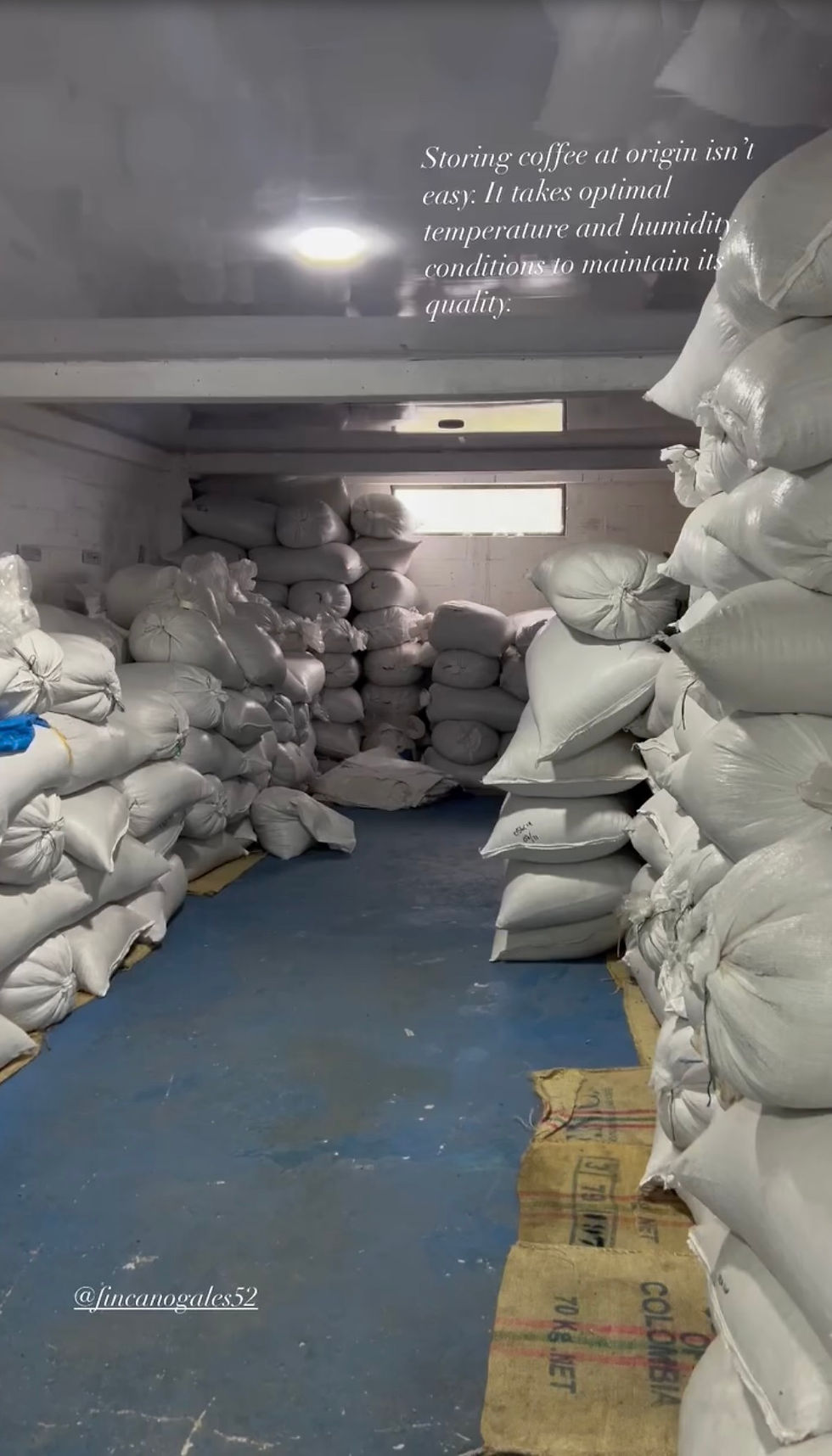
Why Drying Coffee in the Dark Protects Flavor and Longevity
One of the most critical stages in coffee processing is drying. In fact, it is the main bottleneck for most specialty coffee producers. The reason is simple: in conventional drying structures, it is extremely difficult to control temperature, humidity, and light.
To solve these challenges, we created a dedicated space called the Dark Drying Room. Inspired by a trip to Panama—and building on our existing drive to improve this key step in the production chain—we built an environment where all three variables are precisely managed.

Temperature: Protecting Delicate Floral and Fruity Compounds Exposing coffee cherries to high temperatures (40°C to 45°C), as commonly seen in traditional drying setups, degrades sensitive molecules such as esters—the compounds responsible for sweetness and fruity aromas.
Temperature also directly affects volatile compounds like linalool and geraniol. In varieties like Geisha, these delicate compounds create the characteristic floral flavor notes that coffee lovers prize. Heat also accelerates lipid oxidation; when these fats oxidize, the coffee loses its freshness, significantly shortening its shelf life and stability over time.
Humidity: Preventing Mold and Off-Flavors Coffee-growing regions often experience heavy rainfall, especially during harvest season. When high relative humidity combines with high temperatures and the natural sugars present in coffee cherries, it creates the perfect environment for fungi such as Aspergillus or Penicillium to grow. In the cup, this results in unwanted moldy or earthy flavors.

Light: Avoiding Photo-Degradation
While light may seem less critical than temperature or humidity, exposing beans to intense light causes photo-degradation. This directly damages delicate floral aromas and flavors. Just as wine and olive oil are kept in dark bottles to protect their quality, ultra-specialty coffee must be shielded from direct light during drying.
The Dark Drying Room Environment & Protocol
Inside our dark drying room, coffee undergoes a slow, highly controlled drying process that typically lasts around 5 weeks. We maintain a relative humidity of roughly 40% and an ambient temperature around 86°F (28°C–30°C).
The process ends when the coffee reaches a target moisture content of ~12% and a stable water activity level between 0.5 and 0.6. This extended drying cycle guarantees exceptional cup clarity, metabolic stability, and long-term shelf life for export.
Because of the time and infrastructure required, our Dark Drying Room is primarily reserved for our flagship offerings Grand Reserve.
Dictionary
Esters: Organic compounds created during fermentation and maturation that provide sweet, fruity, and floral flavors in coffee. These delicate compounds easily break down when exposed to high heat or direct sunlight.
Fungal Contamination (Aspergillus / Penicillium): Common mold species that thrive in warm, humid, and uncontrolled drying environments. They feed on the sugars in coffee fruit and create unwanted moldy, baggy, or earthy defects in the cup.
Geraniol & Linalool: Two highly volatile, natural aromatic compounds responsible for complex floral notes in coffee (most famously found in varieties like Geisha). Heat and intense light cause these compounds to evaporate before the green coffee reaches the roaster.

Lipid Oxidation: The breakdown of natural fats and oils inside the coffee bean when exposed to high temperatures and oxygen. When lipids oxidize, the coffee rapidly loses its fresh, vibrant flavors and develops a short, unstable shelf life.
Photo-Degradation: The damage caused to organic matter when exposed to intense, direct light. In coffee drying, photo-degradation breaks down delicate flavor molecules and strips away floral and fruit notes.
Relative Humidity (RH): The percentage of moisture present in the air relative to the maximum amount of moisture the air can hold at a given temperature. Controlling relative
humidity (keeping it around 40% in initial drying) prevents microbial growth and ensures controlled, uniform drying.
Storage Stability (Shelf-Life): The ability of a green coffee lot to maintain its cup score, acidity, and freshness over time during transport and storage. Controlled, low-temperature drying preserves bean cell structure and extends storage stability.
Water Activity: A measurement of how "free" or unbound water is within the coffee bean, which dictates biological stability. Maintaining correct water activity prevents the development of mold or off-flavors during export.